
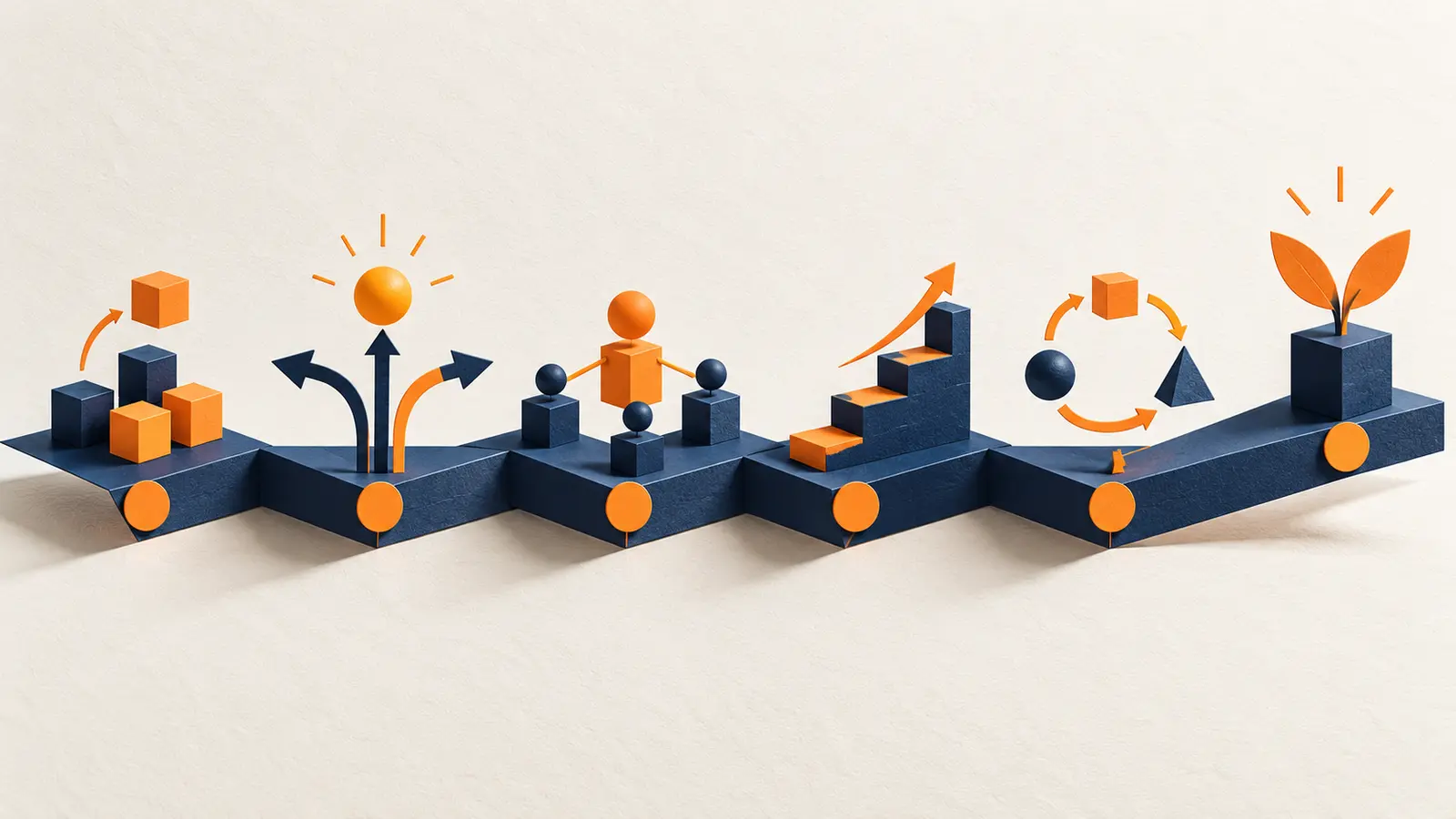
Short answer: The most important HR and L&D trends in Singapore for 2026 are people-centred AI adoption, stronger people leaders, performance-first learning, job redesign linked to skills, more workplace learning and better evidence of application. The common direction is clear: move learning closer to real workflows, decisions and business transformation instead of treating training as a separate activity.
This is not a prediction list built from vendor surveys. It is a practical reading of Singapore’s current policy direction and workforce-learning ecosystem as at 10 October 2026. The signals come from the Ministry of Manpower, SkillsFuture Singapore, the Infocomm Media Development Authority and the Institute for Adult Learning.
For HR and L&D leaders, the value is not knowing that a trend exists. It is deciding what to change in the next planning cycle.
What changed in Singapore during 2026
On 24 September 2026, Singapore’s Tripartite Workgroup on Human Capital Capability Development released five recommendations intended to strengthen human-capital capability across the economy. The Ministry of Manpower said the recommendations aim to benefit more than two million workers, support at least 2,000 enterprises and build the capability of 20,000 HR professionals and people leaders.
The recommendations connect several areas that organisations often manage separately: fair and progressive workplaces, AI in HR, professional HR practice and people-leader capability. That connection matters. Technology adoption will not deliver sustainable performance if jobs, leadership, learning and employee experience are designed independently.
Trend 1: AI fluency is moving into HR and manager workflows
The conversation is shifting from access to AI tools toward useful and responsible application. The Ministry of Manpower’s People-centred AI Transformation for HR initiative combines AI solutions with implementation guidance, consultancy, training and funding support. It also includes accredited AI fluency development for HR professionals and planned guidance on responsible AI use in recruitment.
At the wider workforce level, IMDA’s National AI Impact Programme is designed to support 10,000 enterprises over three years and 100,000 workers to become AI-bilingual by 2029. The emphasis includes applying AI inside domain-specific workflows, not learning prompts in isolation.
What HR and L&D should do: select two or three workflows where AI could improve quality, speed or judgement. Define the human decision that remains accountable, the data that must be protected and the behaviour managers need when reviewing AI-assisted work.
Use SEED’s guide to building AI judgement in managers when the capability need goes beyond tool demonstrations.
Trend 2: People leaders are becoming transformation infrastructure
Singapore’s human-capital recommendations explicitly identify strong people leaders at every organisational level as necessary for the future of work. This is more than a call for another leadership course. Managers translate enterprise priorities into team decisions, explain uncertainty, notice capability risks, redesign work locally and determine whether employees experience change as coherent or chaotic.
What HR and L&D should do: stop treating managers mainly as a communication channel. Map the recurring moments in which they must make workforce transformation real. Examples include reallocating work after automation, holding career conversations as roles change, coaching responsible AI use and deciding when a problem requires learning, process redesign or escalation.
Define observable manager practice for those moments, then use it to guide selection, learning design and performance conversations.
Trend 3: Learning design is becoming performance-first
In April 2026, the Institute for Adult Learning introduced initiatives intended to move enterprises from fragmented training interventions toward integrated work-and-learning solutions focused on workplace performance and sustained business improvement.
This direction challenges a familiar operating model in which L&D receives a topic request, commissions a workshop and reports attendance. Performance-first design begins earlier. It asks what is happening at work, whether capability is the real constraint and what conditions will allow better performance after learning.
What HR and L&D should do: require every substantial learning brief to state the business situation, current behaviour, target behaviour, structural barriers and evidence of progress. The SEED Leadership Programme Brief provides a reusable structure.
Trend 4: Job redesign and capability building are converging
SkillsFuture’s 2026 announcements place AI upskilling alongside the Workforce Development Grant for job redesign, capability building and workforce technology. MOM’s workforce-transformation support follows the same logic: future readiness depends on both the work and the worker.
This matters because a training solution can fail when authority, process, workload, incentives or technology remain unchanged. Teaching a manager to delegate will not help if every decision still requires the manager’s approval. AI training will not improve productivity when employees lack access to safe data, redesigned workflows or a clear standard for review.
What HR and L&D should do: separate capability gaps from operating barriers during diagnosis. Assign owners to both. Some performance problems require learning; others require a decision about role, process or system design.
Trend 5: Workplace learning is becoming part of the architecture
Formal sessions remain useful when people need shared language, protected practice and expert feedback. But application happens inside real work. Singapore’s workplace-learning direction increasingly emphasises structured practice, on-the-job learning and performance outcomes.
What HR and L&D should do: design a bounded application cycle around each priority programme:
- Choose one real task, conversation or decision.
- Define what good practice looks like.
- Let the participant apply it within a realistic period.
- Arrange feedback from a manager, peer, coach or stakeholder.
- Review evidence and decide what to continue, adapt or stop.
This cycle makes transfer visible without turning every learning initiative into a large measurement project.
Trend 6: Evidence is moving closer to behaviour and decisions
Completion, attendance and satisfaction remain useful for operating a programme. They cannot show whether leaders perform differently at work. The stronger direction is a chain of evidence that begins close to the learning and moves carefully toward business performance.
| Evidence level | Question | Example |
|---|---|---|
| Experience | Could participants access and engage with the learning? | Attendance, completion and relevance feedback. |
| Practice | Can they demonstrate the behaviour in a realistic task? | Scenario decision, observed conversation or work output. |
| Application | Did the behaviour appear in real work? | Manager observation, peer review or applied assignment. |
| Performance | What relevant work signal changed? | Decision cycle time, quality, rework or stakeholder experience. |
| Business | What wider outcome may the programme have contributed to? | Retention, productivity, customer or operating indicators. |
What HR and L&D should do: agree on evidence before delivery and decide what action each signal will trigger. Use the SEED answer on measuring training effectiveness to build a proportionate chain.
A practical priority table for 2026 planning
| Signal | Do next | Avoid |
|---|---|---|
| AI is entering a workflow | Define the human decision, safe-use boundary and review behaviour. | Running generic prompting sessions without workflow ownership. |
| Managers carry transformation | Map critical manager moments and observable practice. | Using managers only to repeat central communication. |
| A training request arrives | Diagnose capability and structural barriers together. | Assuming every performance issue is a knowledge gap. |
| Learning must transfer | Build a work assignment, support and review date. | Ending the design at the final workshop. |
| Leaders ask for ROI | Agree evidence and decisions before launch. | Claiming business impact from attendance or confidence alone. |
A 90-day action plan for HR and L&D leaders
Days 1–30: choose one business-critical workflow
Identify a workflow being changed by AI, growth, regulation or organisational redesign. Interview the people doing and managing the work. Document current friction, target performance and non-learning barriers.
Days 31–60: define capability and practise it
Translate the workflow into decisions and behaviours. Build a small practice experience using realistic information and constraints. Test it with a representative group and improve the design from observed difficulty, not satisfaction alone.
Days 61–90: apply, review and decide
Run a bounded workplace experiment. Collect evidence from participants, managers and the work itself. Decide whether to scale the learning, adapt it, remove an operating barrier or pause the intervention.
What these trends do not mean
- AI adoption does not remove the need for professional judgement or fair employment practice.
- Workplace learning does not mean formal training is obsolete.
- People-leader development does not solve unclear strategy or poor operating design.
- Evidence does not require an expensive dashboard for every programme.
- Singapore policy direction should inform organisational choices, not replace diagnosis of your own context.
Sources
- Singapore Ministry of Manpower — Recommendations to Strengthen Human Capital Capability, 24 September 2026
- SkillsFuture Singapore — Committee of Supply 2026 Highlights
- IMDA — National AI Impact Programme, 2 March 2026
- Institute for Adult Learning — People-Driven Innovation Strategy, 10 April 2026
Turn trend awareness into a capability decision
The useful question is not which trend deserves the loudest headline. It is where your organisation’s work, leadership and workforce capability are becoming misaligned—and what evidence would justify action.
SEED Academy helps organisations translate that decision into practical leadership and capability development. Explore Training Programme Design or start a 20-minute capability conversation.