
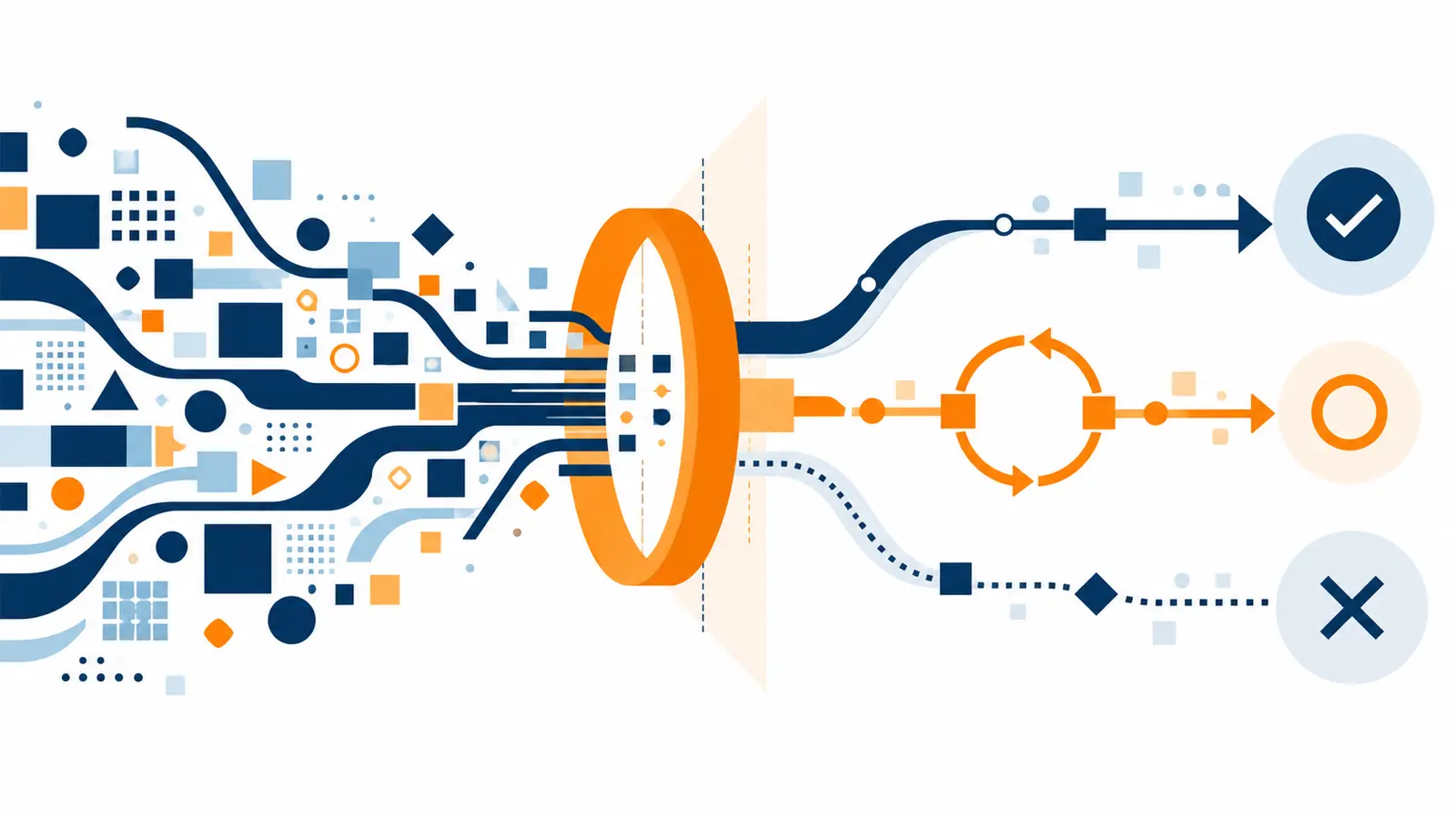
Managers are becoming the point where organisational AI ambitions meet everyday work. They decide which tasks to change, what information a tool can access, how much autonomy to allow, when a person must intervene and whether an output is good enough to act on. A catalogue of clever prompts does not prepare them for those decisions.
This article explains how HR, L&D and business leaders can design AI training for managers that improves workplace judgement. The goal is not to turn every manager into a technical specialist. It is to help them use approved tools with domain knowledge, clear decision rights and evidence—while keeping human accountability visible.
Why prompt training is not a manager capability strategy
Prompting is useful when it helps someone frame a task, supply relevant context and specify an output. But generic prompt practice can become detached from the work. Participants may produce polished text without understanding whether the tool was appropriate, whether sensitive information was exposed, how the output should be checked or who owns the final decision.
Singapore's Institute for Adult Learning made a similar distinction in August 2026. Its Domain+ approach starts with workers' actual domains, problems and opportunities, then introduces AI as a resource for testing and refining solutions. IAL argues that generic tools and prompts do not automatically translate into workplace value; domain knowledge and collective problem solving shape useful application. SEED's interpretation is that manager training should begin with the decision and workflow—not the interface.
Governance also changes the learning objective. Singapore's January 2026 Model AI Governance Framework for Agentic AI emphasises risk boundaries, meaningful human accountability, technical controls and end-user education. Although many managers will use simpler generative tools rather than autonomous agents, the practical principle travels: greater consequence or autonomy requires clearer controls, checkpoints and responsibility.
Define AI judgement as observable manager behaviour
AI judgement is the ability to choose, supervise and review AI use in context. It sits between broad AI literacy and technical implementation. A manager with good AI judgement does not need to know every model architecture. They do need to demonstrate behaviours that colleagues, risk owners and leaders can observe.
- Frames the work before choosing the tool. Names the user, outcome, quality standard and decision the work supports.
- Checks authority and boundaries. Uses approved tools and data, follows policy and identifies when another owner must decide.
- Scales oversight to consequence. Distinguishes a reversible draft from an employment, financial, safety or customer decision.
- Tests outputs. Checks facts, assumptions, sources, calculations, omissions and potentially unfair patterns using appropriate expertise.
- Keeps accountability human. Can explain what the AI contributed, what the manager decided and why.
- Learns from use. Reviews errors, near misses, rework and unintended effects instead of treating deployment as the finish line.
These behaviours turn a broad aspiration—‘use AI responsibly’—into a trainable and assessable standard. They also stop technical confidence from being mistaken for decision quality.
Use the PAUSE judgement gate before action
SEED's PAUSE gate is a practical learning aid, not a regulatory standard or validated assessment. Managers use it before an AI-supported output becomes a consequential action. The five checks deliberately slow the decision at the point where automation bias and time pressure can make weak work look complete.
Purpose
Name the work outcome, user and decision. Ask whether AI adds value here.
Authority
Confirm the tool, data, decision rights and policy boundaries are approved.
Uncertainty
Assess consequence, reversibility, affected people and limits of the output.
Scrutinise
Verify facts, sources, logic, bias, omissions and fit with the work context.
Exercise judgement
Decide, record the basis, escalate where needed and monitor the result.
1. Purpose: start with the work
Ask what the manager is trying to improve: speed, quality, consistency, access to information, scenario exploration or another outcome. Define who will use the output and what decision it informs. If the task has no clear outcome or evidence standard, adding AI will make the ambiguity faster rather than resolve it.
A useful training exercise is to bring one real workflow and mark the steps that involve searching, drafting, analysing, deciding and acting. Managers can then compare where AI might assist with where human expertise, relationship or accountability must remain central. This connects naturally with strategic thinking practice for managers: the tool can expand options, but the manager still tests assumptions and consequences.
2. Authority: make boundaries usable
Managers need policy they can apply at the moment of work. Translate broad principles into answers to practical questions: Which tools are approved? What categories of data may be entered? Which uses need legal, security, HR or risk review? Who can approve a pilot? What must be documented? Where can an employee report a problem?
Do not ask training participants to invent these answers. Invite the relevant governance owners to define them, then give managers cases where the correct move is to proceed, seek approval, change the data or stop. A manager who knows how to escalate is showing capability—not failure.
3. Uncertainty: match oversight to consequence and autonomy
Risk is not determined by whether an output looks professional. Consider who could be affected, how severe an error would be, whether the action can be reversed, how much the system can do without intervention and whether a qualified person can realistically detect a problem.
| Work situation | Illustrative use | Manager checkpoint | Learning emphasis |
|---|---|---|---|
| Low consequence and reversible | Generate agenda options from non-sensitive information | Manager reviews usefulness, tone and factual fit before sharing | Clear purpose, efficient editing and basic verification |
| Moderate consequence or partial reversibility | Summarise approved operational data and propose next questions | Domain expert checks inputs, calculations, assumptions and recommendations | Evidence standards, uncertainty and documented approval |
| High consequence or limited reversibility | Support a decision affecting employment, safety, legal rights, finance or customers | Use only within approved governance; AI does not make the final decision and qualified owners review the case | Decision rights, independent challenge, traceability and escalation |
| Unapproved or prohibited | Use a public tool with confidential personal or client data | Stop; use an approved alternative or seek guidance | Boundary recognition and confident refusal |
This table is a training device, not legal or risk advice. Organisations should define categories for their sector, systems and obligations. The underlying principle aligns with Singapore's framework: controls and human checkpoints should be commensurate with risk and autonomy.
4. Scrutinise: teach verification as a work practice
‘Check the output’ is too vague. The check must reflect how the result will be used. A factual briefing may require primary sources and current dates. A calculation may need an independently reproduced result. A people decision may require review for incomplete evidence, protected characteristics, inconsistent standards and an appeal route. A customer communication may require policy, legal, tone and accessibility checks.
Give managers a verification brief with four fields: claim or recommendation; evidence required; qualified reviewer; and action if confidence is insufficient. Then deliberately seed practice outputs with plausible errors, missing context and unsupported certainty. The learning happens when managers notice, test and respond—not when the AI produces a perfect answer.
5. Exercise judgement: keep the decision legible
Managers should be able to explain what the tool did, what they checked, what remained uncertain and why they acted. Consequential uses may need a decision record; routine uses may only need a lightweight note or standard workflow. Documentation should support accountability and learning without creating a theatre of compliance.
After the work, use a brief after-action review: What did we intend? What happened? Why? What will we change? This makes AI capability a continuing operating practice rather than a one-off course.
Design a six-week manager learning journey
A workshop can create common language, but judgement grows through repeated decisions in context. A practical six-week journey can combine short facilitated sessions, workplace application and manager or peer review.
- Week 1—Map current use. Managers inventory where AI is already assisting, recommending or acting in their team. They note tools, data, affected stakeholders and decision owners. This surfaces shadow use without starting from blame.
- Week 2—Choose a bounded task. Each manager selects one approved, useful and sufficiently reversible workflow. They define baseline quality, time, rework and stakeholder requirements before changing it.
- Week 3—Practise task and prompt framing. Participants use purpose, context, constraints and output standards. They compare outputs but are scored on work quality and judgement, not prompt complexity.
- Week 4—Run verification drills. Managers review flawed outputs, locate credible evidence, identify missing expertise and decide whether to accept, revise, escalate or reject.
- Week 5—Set decision rights and handoffs. Teams define which steps AI may support, where human approval sits, who is qualified to review and what happens when confidence is low.
- Week 6—Review live application. Managers bring work evidence, compare baseline with the new process, examine unintended effects and set one operating change. A sponsor decides what should scale, adapt or stop.
Use natural workgroups where possible. IAL's 2026 Domain+ report found stronger AI solutions when colleagues learned around shared workplace problems than when learning remained an individual exercise. Treat that finding as promising local evidence rather than a universal guarantee; the programme described eight community-based experiments, not every sector or organisational setting.
Worked example: an AI-assisted hiring brief
This is an illustrative fictional composite, not a SEED client case. A department head wants to use an approved generative AI tool to draft a hiring brief for a new regional operations role. The original role description is outdated, and the manager is under time pressure.
Under Purpose, the manager defines the outcome as an accurate role brief for recruiter and candidate use—not a final hiring decision. Under Authority, she confirms the approved enterprise tool and removes personal information from past employee files. HR owns the job architecture and final approval. Under Uncertainty, the team identifies two risks: the model may reproduce outdated requirements, and a regional role may be written around one market's assumptions.
The manager asks the tool to compare current responsibilities, required decisions and interfaces, then produce questions rather than a finished answer. Under Scrutinise, the role's current stakeholders review the workflow, HR checks level and employment language, and the manager tests whether each requirement is necessary for performance. One seemingly standard qualification is removed because no work evidence supports it. Under Exercise judgement, the manager records the sources used, open assumptions and HR approval.
The useful capability is not the prompt. It is the manager's decision to bound the task, protect information, involve qualified reviewers, challenge inherited assumptions and retain accountability for the final brief.
Measure capability through workplace evidence
Training effectiveness should not be reduced to completion, satisfaction or confidence. Start with the behaviour and work outcome the organisation expects to improve, then choose a small set of indicators.
| Measure | Evidence | What it can show | Watch-out |
|---|---|---|---|
| Use-case selection | Sample of proposed and approved uses | Managers distinguish valuable, bounded work from unsuitable use | A high approval rate may hide weak challenge |
| Verification quality | Review notes, corrected claims, reproduced calculations or expert sign-off | Outputs are tested against the consequence of use | Counting checks does not show whether they were competent |
| Policy adherence and escalation | Tool/data compliance, timely questions, incidents and near misses | Managers recognise boundaries and seek help | More reporting can initially reflect healthier transparency |
| Work performance | Cycle time, quality, rework, customer or stakeholder acceptance | The redesigned process contributes to a useful result | Do not attribute every change to training without a credible comparison |
| Decision traceability | Clear owner, evidence, approval and monitoring record for consequential uses | Human accountability remains legible | Excess paperwork can drive informal workarounds |
Use the broader principles in SEED's guide to measuring training effectiveness: separate learning, workplace behaviour and business contribution. A manager can pass a knowledge quiz and still apply AI poorly; a faster process can also become less accurate. Look at the whole performance pattern.
Common mistakes in AI training for managers
- Starting with a tool tour. Tools change quickly. Anchor the learning in recurring decisions, work standards and governance that survive interface updates.
- Treating all uses as equal. A meeting agenda and an employment recommendation should not have the same review process.
- Writing ‘human in the loop’ without designing the loop. Name the reviewer, approval point, evidence, authority and time available. Otherwise the checkpoint may be symbolic.
- Using public examples only. Generic scenarios make it easy to agree and hard to transfer. Use sanitised versions of real workflows, with permission and data protection.
- Rewarding confidence over challenge. Skilled managers should be willing to say the evidence is insufficient or the use is outside policy.
- Measuring adoption alone. More AI use is not automatically better. Track fit, quality, risk, rework and affected stakeholder outcomes.
- Ignoring the manager's team. Managers need to set expectations, invite concerns, review work and prevent speed pressure from overriding boundaries. SEED's psychological safety guidance can help teams raise errors and uncertainty early.
Implementation checklist for HR and L&D
- Define the manager decisions and workflows the learning must improve.
- Confirm approved tools, data rules, decision owners and escalation routes with governance functions.
- Create risk-tiered scenarios, including cases where the correct decision is not to use AI.
- Teach purpose and evidence standards before prompt techniques.
- Practise verification with intentionally flawed, incomplete and overconfident outputs.
- Specify meaningful human checkpoints by consequence, reversibility and autonomy.
- Use real but sanitised workplace assignments with qualified review.
- Measure behaviour, work quality, escalation and policy adherence from a baseline.
- Review incidents, near misses and unintended effects without suppressing responsible reporting.
- Refresh examples and controls as tools, organisational policy and external guidance change.
Frequently asked questions
What should AI training for managers include?
Include enough tool fluency to complete relevant work, then practise task selection, data and policy boundaries, risk-based human checkpoints, output verification, decision documentation and review after use. Managers should apply these skills to authentic work scenarios and be assessed through observable decisions and work quality—not attendance, confidence or the number of prompts learned.
How is AI judgement different from AI literacy?
AI literacy helps someone understand what AI is, what it can do and its common limitations. AI judgement is the ability to decide whether and how to use it in a specific work situation, what information may be used, what must be checked, who remains accountable and when the right decision is to escalate or not use AI.
Should managers learn prompting first?
Prompting can support practice, but it should follow a clear work purpose and approved-use boundaries. Starting with generic prompt tricks can produce activity without value and may encourage managers to use AI where it is unsuitable. Teach managers to frame the task, consequence and evidence standard before they optimise the instruction given to a tool.
How can HR and L&D measure AI training effectiveness?
Measure a small set of workplace indicators: appropriate use-case selection, policy compliance, quality of verification, error or rework patterns, escalation quality, decision traceability and performance of the chosen work process. Compare with a baseline or credible benchmark, and do not treat self-reported confidence or time saved as proof of better decisions.
Does human review make every AI use safe?
No. Human review can become a symbolic click if the reviewer lacks time, information, expertise or authority. Some uses may remain prohibited or unsuitable because of privacy, legal, safety, employment or other consequences. Match the reviewer, evidence and approval point to the risk and autonomy of the task, and follow organisational policy and applicable professional advice.
Sources and evidence
- Ministry of Digital Development and Information, Singapore launches the Model AI Governance Framework for Agentic AI (22 January 2026) — official guidance on risk boundaries, meaningful human accountability, controls and end-user training.
- IMDA, updated Model AI Governance Framework for Agentic AI (20 May 2026) — update incorporating industry feedback, case studies and practices addressing automation bias.
- Institute for Adult Learning Singapore, Domain+: Amplifying Expertise at Work with AI (19 August 2026) — local workplace-learning evidence supporting domain-first and team-based AI capability development.
- US National Institute of Standards and Technology, AI Risk Management Framework Core — voluntary framework covering governance, context, human oversight, testing and ongoing monitoring.
- NIST, Artificial Intelligence Risk Management Framework: Generative Artificial Intelligence Profile (2024; page updated 8 April 2026) — cross-sector companion resource for generative AI risks.
Build managers who can decide—not just generate
AI capability becomes valuable when managers can connect a tool to real work, understand its limits, make the right human checkpoints meaningful and learn from what happens next. That combination of domain knowledge, critical challenge and accountability is more durable than any collection of prompts.
If you are designing a practical AI capability experience for managers, SEED Academy's Workshops & Masterclasses can use your approved tools, work scenarios and decision boundaries to build shared practice. For a multi-cohort journey linked to operating routines and measurement, explore Training Programme Design. Start by using the Training Needs Diagnostic to distinguish a skill gap from a policy, process or role-design problem.