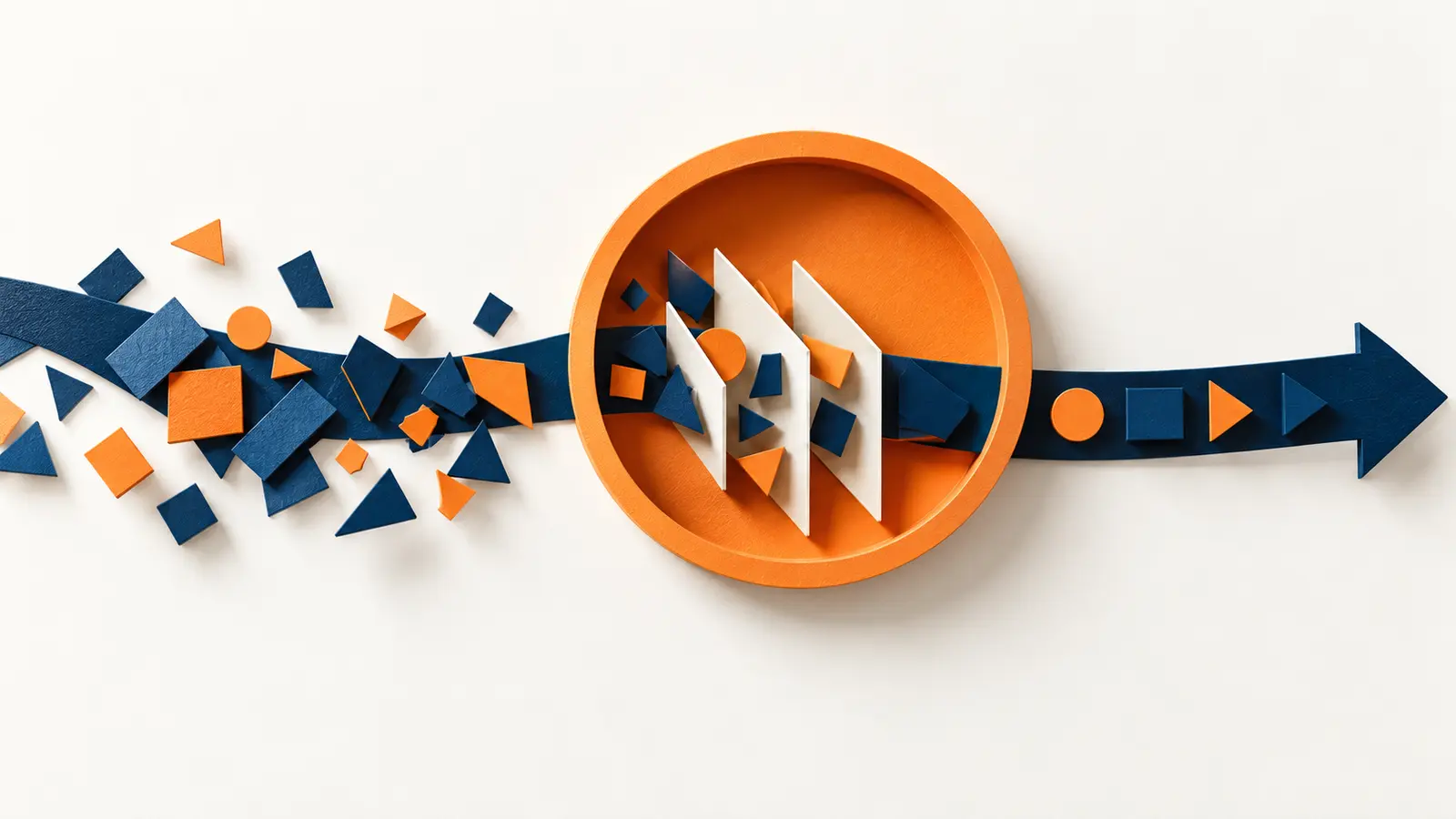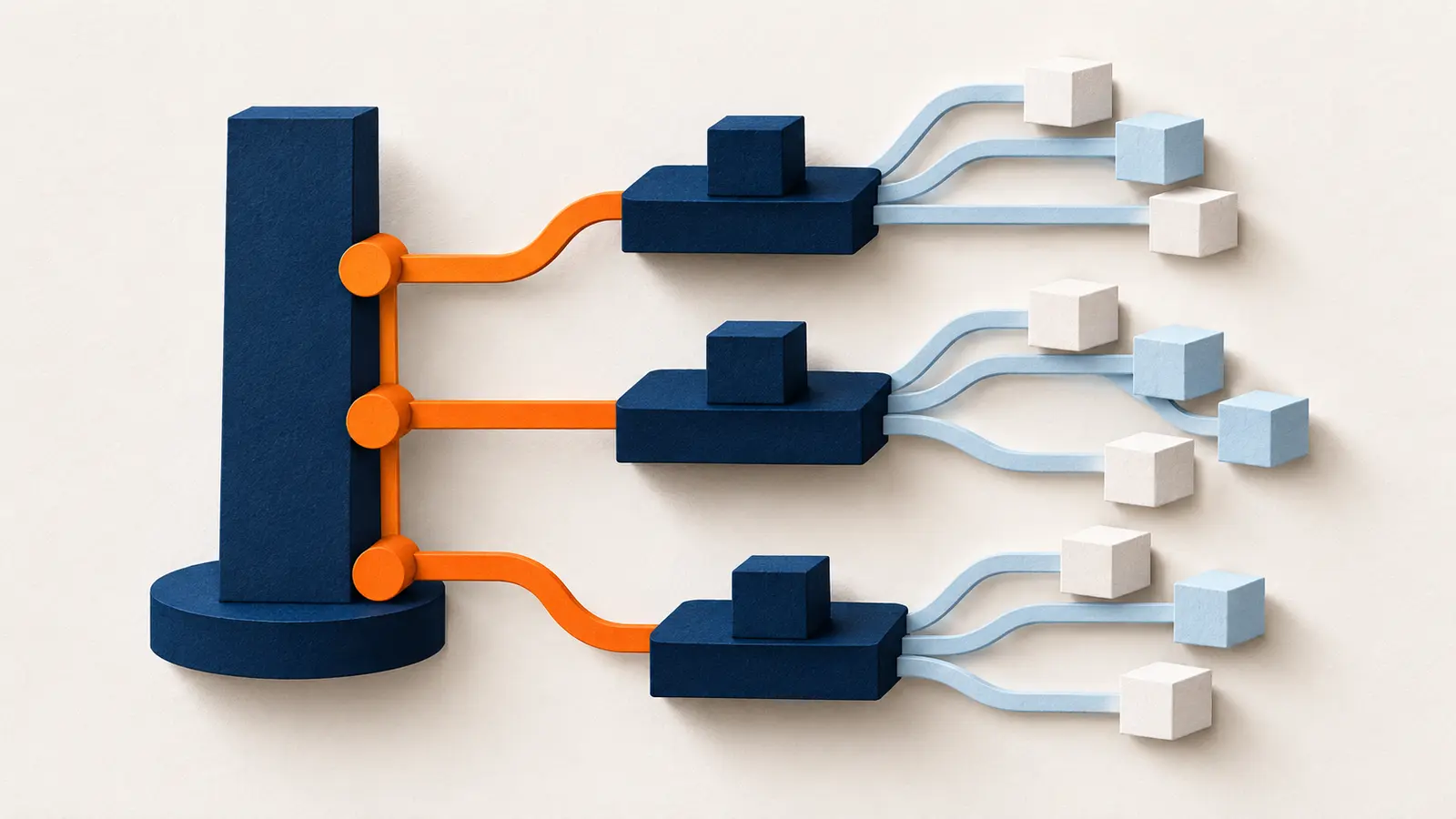

A team meeting is one of the most visible places where management becomes work. Priorities are interpreted, risks surface, decisions are made, disagreements are handled and ownership either becomes clear or dissolves into another calendar invitation.
That makes meeting quality a manager-capability issue. Yet many programmes teach etiquette and agenda templates without asking what live interaction is supposed to achieve. Managers may become better at opening a meeting and still leave the team unclear about the decision, the evidence, who owns the next move or why everyone needed to attend.
Research now treats meetings as more than a scheduling burden. A 2026 review of thirty years of meeting science organises the field around meetings as potential stressors, performance mechanisms, platforms for voice and inclusion, stages for leadership and power, and expressions of culture. For HR and L&D, the implication is practical: train the management behaviour inside the meeting and the coordination before and after it—not only the event itself.
Start with the meeting's job
Before a manager sends an invitation, they should be able to finish one sentence: By the end of this meeting, we need to... The answer should name a useful change in shared understanding, a decision, a resolved dependency, a tested option or a committed action.
An agenda is not the same as a purpose. Project update, people topics and regional priorities are subjects. A purpose describes what the group must accomplish together. For example:
- Choose between two launch sequences using customer, capacity and regulatory evidence.
- Surface the three dependencies most likely to delay the quarter and assign escalation owners.
- Understand why a service handoff is failing and agree one two-week process test.
- Resolve different interpretations of the quality standard before work continues.
If the job is to transmit information that people can understand independently, use a written or recorded update. If the job needs questions, judgement, trade-offs, commitment or relationship repair, live interaction may add value. The test is not whether people are available. It is whether interaction materially improves the work.
| Work need | Should it be a meeting? | Design priority | Useful evidence afterward |
|---|---|---|---|
| Share a routine update | Usually not; publish it where work is tracked | Make the information clear, searchable and open to questions | People can find and use the update without a live recap |
| Build shared understanding | Maybe, when interpretations or context differ | Surface evidence, assumptions and unanswered questions | The group can state what is agreed, disputed and unknown |
| Generate options | Yes, when perspectives must interact | Separate idea generation from evaluation | A usable option set and criteria for the next decision |
| Make a consequential decision | Often, when trade-offs need real-time examination | Name the decision owner, criteria, contributors and deadline | A recorded choice, rationale, implications and review trigger |
| Resolve work disagreement | Yes, if informal dialogue is safe and appropriate | Separate facts, interpretations, interests and work requirements | A workable agreement or a clear escalation route |
| Coordinate a time-sensitive risk | Yes, if dependencies are changing quickly | Focus on current signal, owner, threshold and response | Named actions and escalation triggers in the normal workflow |
This first decision can remove meetings before training begins. If the organisation rewards visibility, duplicates reporting or leaves decision rights unclear, a facilitation course cannot solve the system by itself. Use SEED's Training Needs Diagnostic to distinguish a manager skill gap from a governance, workflow, technology or incentive problem.
Define effective facilitation as observable behaviour
Do not assess managers by confidence, energy or how smoothly they speak. Define meeting capability through actions that participants and observers can notice:
- Chooses the right interaction. The manager cancels, shortens or moves an update when live discussion will not improve the work.
- Names the outcome. Participants know what must be understood, decided or committed by the end.
- Prepares the evidence. People receive enough context to contribute without listening to a long presentation first.
- Designs participation. The manager invites input from people with relevant knowledge and prevents status, speed or proximity from becoming the only route to influence.
- Maintains focus without suppressing useful dissent. Side issues are captured, while evidence that could change the decision stays in the room.
- Makes the decision visible. The group can distinguish discussion, recommendation, consultation and final decision.
- Closes the loop. Action, owner, date, support and review point are recorded where the work continues.
- Reviews the meeting system. The manager changes cadence, attendees or format when the evidence shows low value.
These behaviours create a training brief and an observation scorecard. They also prevent meeting capability from becoming a personality contest. A quiet manager can facilitate a rigorous meeting; a charismatic manager can create energy without a usable decision.
Use the SEED Meeting-to-Action Board
The SEED Meeting-to-Action Board is a learning aid, not a validated assessment. It gives managers four design questions for one real meeting and keeps the process connected to the work that follows.
What must change?
Name the shared understanding, decision, solved dependency or action the meeting must produce.
What should enter?
Bring the facts, perspectives, constraints and uncertainties required for sound participation.
How will we work?
Define the decision owner, participant roles, criteria and method for handling options or disagreement.
What leaves the room?
Record the decision or action, owner, date, support, affected work and follow-up point.
1. Purpose: name the movement, not the topic
Train managers to write the desired output before designing the agenda. If they cannot name it, the meeting may be a habit rather than a tool. Ask: What will be different after this group interacts? Who needs to do something with the result? What would make the meeting unnecessary?
A meeting can have more than one output, but too many jobs create weak attention. Put information in a pre-read, choose the one or two matters that need interaction and make the rest asynchronous. This is especially important when attendance spans functions, seniority or markets; every extra topic multiplies context switching.
2. Evidence: prepare people to contribute
A long presentation at the start often consumes the time needed for reasoning. Share the minimum useful context early: the question, decision boundary, key evidence, competing options, constraints and what is still unknown. Ask contributors to flag assumptions or missing information before the meeting when possible.
Evidence does not mean data alone. Operational experience, customer feedback, local constraints and specialist judgement may all matter. Managers should state which claims are observed facts, interpretations or forecasts. This lets the group challenge reasoning without turning disagreement into a contest of confidence.
3. Choice: design participation around the work
Different meeting jobs need different facilitation. A brainstorming session benefits from generating before evaluating. A risk review needs thresholds, owners and escalation. A decision meeting needs criteria and a visible decision owner. A sensitive disagreement may need separate preparation and a safer facilitated process.
Participation should not mean every person speaks for the same duration. It means relevant evidence has a fair route into the work before closure. The manager can use a short written reflection, a structured round, targeted questions, pair discussion or silent option review. Explain why the method fits the task so it does not feel like facilitation theatre.
When tension is interpersonal or may involve conduct, safety, harassment, discrimination or a formal grievance, use the appropriate organisational route. SEED's team conflict guide helps managers distinguish informal work conflict from situations that need authorised support.
4. Commitment: connect the meeting to the workflow
Close by reading back what was decided, what remains open and what each owner will do. Record the rationale when it will help others implement the choice or know when to revisit it. Put actions in the normal project, decision or work system rather than a private set of minutes no one returns to.
A 2023 study on interactions before, during and after workplace meetings found that pre-meeting interaction related positively to attendee involvement and that incorporating meeting outcomes into later work related positively to perceived effectiveness. The study used a survey and perceived effectiveness, so it does not prove that one follow-up method causes business performance. It does support training the whole coordination cycle rather than treating the meeting as an isolated hour.
Build training around real meeting moments
1. Audit the meeting system
Ask managers to inventory recurring meetings for two weeks. Capture purpose, attendees, duration, decisions, actions, unresolved items and whether work moved afterward. Add a short participant question: What did this meeting help us understand, decide or do that another method would not?
Do not calculate a dramatic cost number unless salary, time and causal assumptions are credible. The useful output is a pattern: repeated updates, missing decision owners, too many observers, weak preparation, reopened choices, unresolved dependencies or sensitive issues forced into the wrong forum.
2. Practise the purpose test
Give managers real invitations and ask them to choose: cancel, make asynchronous, shorten, split or redesign. They should defend the choice using task interdependence, ambiguity, consequence, need for voice and speed. This builds judgement before technique.
The CIPD evidence review on productive meetings notes that unnecessary or poorly planned meetings can harm wellbeing and performance, while perceptions of effectiveness relate to more positive attitudes and behaviour. Treat this as evidence for disciplined design, not as a promise that reducing meeting count automatically improves results.
3. Rehearse the difficult middle
Most meeting courses over-invest in openings and agendas. Practise the middle: a senior person dominates, a quiet specialist holds relevant evidence, the group starts solving the wrong problem, a new risk changes the option set, disagreement becomes personal, or time runs out before a decision.
Observers should score the manager against observable choices: Did they restate the outcome? Separate evidence from opinion? Ask whose perspective was missing? Protect useful dissent? Name the decision owner? Decide what to park, escalate or close?
4. Practise closure under pressure
Give the group five minutes to close an incomplete discussion. The manager must say what is decided, what is not, who owns the next evidence or action, by when, and where it will be recorded. If no decision is possible, the meeting should still produce a smaller commitment that reduces uncertainty.
Use the After-Action Review guide for a separate learning conversation after meaningful work. A team meeting coordinates current work; an AAR compares intention with evidence to improve future performance. Combining every purpose into one meeting weakens both.
5. Apply one bounded workplace experiment
Each manager redesigns one recurring meeting for two cycles. Change only a few variables: purpose statement, pre-read, attendees, participation method, decision record or follow-up. Agree what evidence will be reviewed. This lets managers learn from work instead of copying a universal meeting formula.
For hybrid teams, SEED's hybrid leadership guide shows how to make outcomes, work signals and decisions visible without adding meetings simply because people are in different places.
A practical half-day learning design
| Time | Learning activity | Work product |
|---|---|---|
| 00:00–00:30 | Review meeting evidence and diagnose one recurring failure pattern | A real meeting selected for redesign |
| 00:30–01:05 | Apply the meeting-purpose test: cancel, move, shorten, split or redesign | A one-sentence outcome and attendance logic |
| 01:05–01:50 | Build the Meeting-to-Action Board using current evidence and decision roles | A facilitation plan and pre-meeting brief |
| 02:05–03:05 | Run branching simulations with dominance, dissent, missing evidence and time pressure | Behaviour feedback from participant and observer perspectives |
| 03:05–03:35 | Practise decision and action closure | A decision record with owner, date and review point |
| 03:35–04:00 | Plan a two-cycle workplace experiment and evidence review | A manager experiment agreed with their manager or peer reviewer |
This is an illustrative architecture, not a fixed duration. High-stakes executive, regulatory or cross-cultural decision forums may need deeper discovery and rehearsal. A narrow team huddle can use a shorter practice cycle. Preserve the sequence: diagnose, choose, design, practise, apply and review.
Worked example: the weekly launch meeting
Illustrative fictional composite: A regional product team holds a 60-minute weekly launch meeting with 16 people. Each function gives an update. Decisions emerge in side conversations afterward, and market risks are often raised when production work is already committed.
The manager first separates information from interaction. Routine progress moves to the shared project record before the meeting. Eight people remain as contributors or decision owners; others receive the record and can flag questions in advance. The meeting purpose becomes: identify the two dependencies most likely to change launch sequence and decide the response.
The manager sends the decision, evidence and constraints one day earlier. In the meeting, each market lead names one material change, the group tests it against agreed launch criteria, and the regional owner closes each decision. The final five minutes capture the choice, rationale, owner, date and trigger for reopening.
After two cycles, the team reviews whether risks surfaced earlier, decisions were findable and actions were completed. If not, the manager changes the process. The example illustrates the standard; it is not a SEED client case or a claimed outcome.
Measure meeting behaviour and work movement
Start with evidence close to the capability:
- Selection: Did the manager choose a meeting only when live interaction added value?
- Preparation: Was the outcome explicit and was relevant context available before discussion?
- Participation: Did needed expertise and affected work have a route into the decision?
- Facilitation: Did the manager maintain focus, surface assumptions and handle dissent without suppressing it?
- Closure: Were the decision, action, owner, date and review point visible?
- Follow-through: Were commitments completed, and did later work use the meeting outcome?
- System value: Were recurring meetings cancelled, shortened or redesigned when evidence showed low value?
Use participant pulse questions carefully. Asking whether a meeting was useful can reveal friction, but satisfaction may be shaped by whether people liked the decision. Combine perceptions with records, work products, observations and completion evidence. Do not claim that one workshop caused productivity, wellbeing or business performance unless the evaluation design supports that conclusion.
A small observational study of eight top-management groups found relationships among goal clarity, focused communication, learning behaviour and meeting effectiveness. The sample was narrow, so use the finding as a design cue rather than a universal effect size. The stronger practical point is that meetings need both structure and learning behaviour: focus without inquiry can close the wrong decision, while discussion without structure may never become action.
Common mistakes in meeting-facilitation training
- Teaching agendas before selection. Managers become more organised at running meetings that should not exist.
- Equating participation with equal airtime. The process ignores whose evidence, authority or affected work matters to the decision.
- Using activities without a work purpose. Energy rises while the decision remains unclear.
- Leaving decision rights implicit. Participants debate as if they own a choice that sits elsewhere.
- Treating every challenge as resistance. Legitimate evidence and implementation risk are suppressed.
- Recording minutes without integrating work. Actions live in a document rather than the operating system where owners execute them.
- Ignoring status and culture. Managers invite input but do not change how higher-status voices shape closure.
- Measuring satisfaction alone. A pleasant meeting may still produce no decision; a difficult meeting may resolve an important issue.
- Adding facilitation to an overloaded manager. The organisation expects redesign without removing low-value forums or clarifying authority.
Effective team meeting checklist
- The meeting has a job that benefits from live interaction
- The desired outcome is written as understanding, a decision, a solved dependency or action
- Only required contributors, decision owners and implementation owners attend
- Context, evidence, constraints and open questions arrive before the meeting where possible
- The participation method fits the task and creates a route for relevant evidence
- The decision owner and decision process are explicit
- Useful dissent is protected while side issues are captured and parked
- The meeting closes with a decision or next action, owner, date and review point
- Outcomes are recorded where the work continues
- The manager reviews whether to keep, shorten, change or stop the meeting
Make meetings part of manager development
Managers do not need another generic instruction to be more engaging. They need to see meetings as a management system: choose the right interaction, make the work visible, structure participation, exercise judgement and connect the room to execution.
The current Institute for Adult Learning facilitation programme reflects active demand in Singapore for leaders and facilitators who can move groups from discussion toward shared understanding and action. SEED's interpretation is to build that capability around the organisation's real meeting moments and evidence, not apply a technique without diagnosis.
The Manager Development Programme Guide can help place meeting facilitation alongside other recurring manager moments. Use the one-to-one template when the work needs focused manager–employee dialogue rather than a group forum.